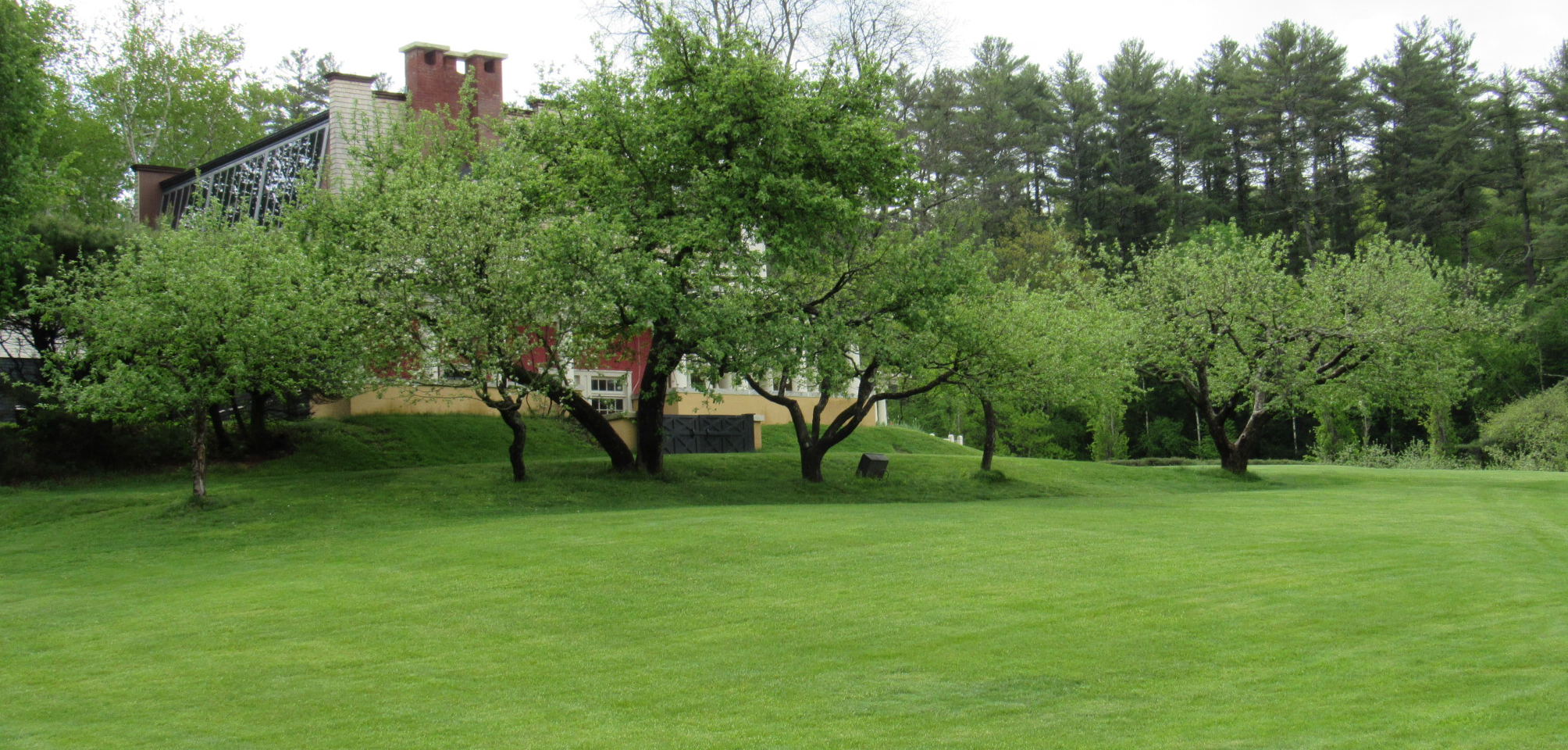
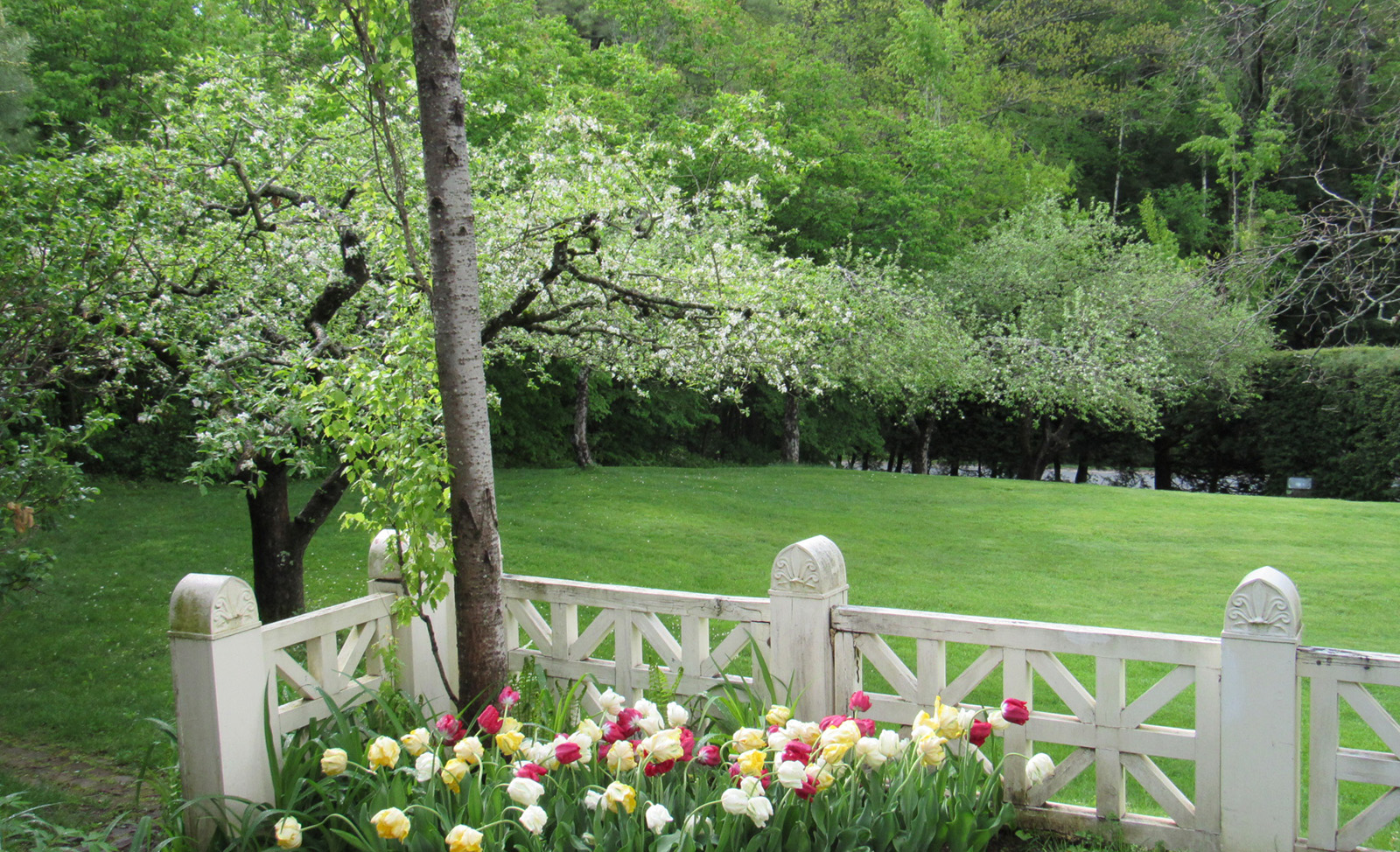
The earliest photographs of the Saint-Gaudens family at Aspet, taken in the summer of 1885, show that a grouping of apple trees was already growing southeast of the house. The row to the west of the Little Studio consisted of six trees ranging from one to two inches in diameter, suggesting that these were planted by Saint-Gaudens.
Many of the trees were lost some time between 1926 and 1965. In the 1970s and 1980s, the park replanted the missing trees using the 1903 survey as a reference. There is no documentation on the apple tree varieties present during the historic period, but the park has identified several varieties with assistance of the Geneva Agricultural Experiment Station at Cornell University, Cooperative Extension at University of New Hampshire, Burford Brothers Nursery in Virginia, and Washington State University Horticulture Department.
With the expertise of these partners and through genetic testing of the trees, one apple tree at Aspet was revealed to be a non-identifiable variety, meaning that its DNA is not in the National Clonal Germplasm Repository. This makes it unique part of this landscape and a benefit to those seeking other apple tree information, such as the DNA of heirloom varieties around New England, information about dissemination of trees across the country, and the lineage of trees that gave rise to early varieties.
The Cultural Landscape Report for Aspet documents this history and significance of the landscape and provides a guide for treatment of features as part of the landscape, including the apple trees. It recommends replacing trees that are lost with varieties that date to the historic period, and propagating replacement plants from existing trees.